
Design Experiments
A collection of selected design experiments and featured projects. These works explore material, structure, and fabrication through iterative prototyping and hands-on experimentation.
Featured Work: Discrete Assembly (2026)
This project draws from construction-based design approaches where assembly remains visible and legible. Extending these principles into desktop-scale digital fabrication, it explores how modular 3D-printed components can scale beyond the limits of consumer FDM printers while retaining a clear expression of structure.
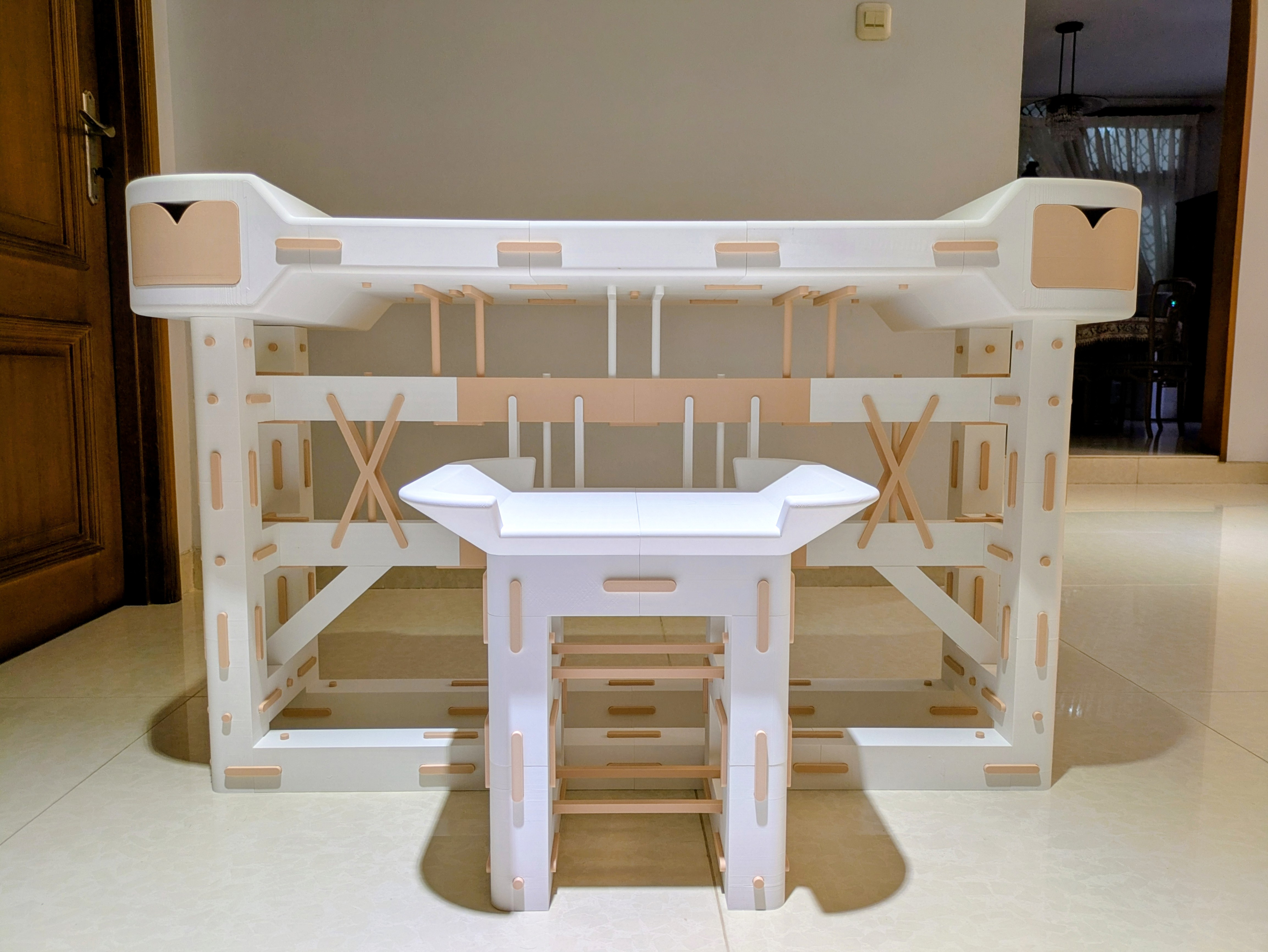
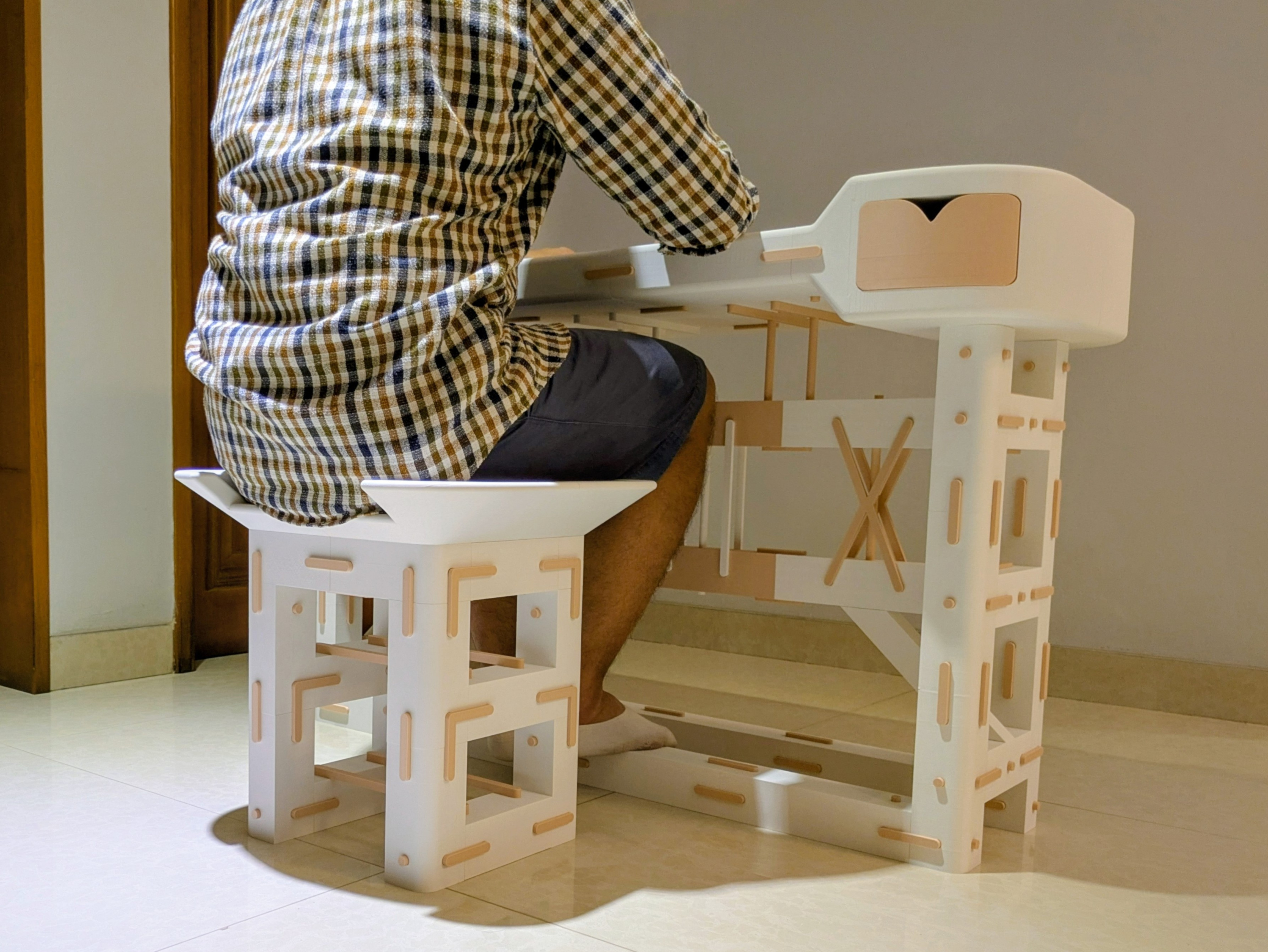
Discrete Assembly No.1: a modular chair defined by visible connectors and layered construction
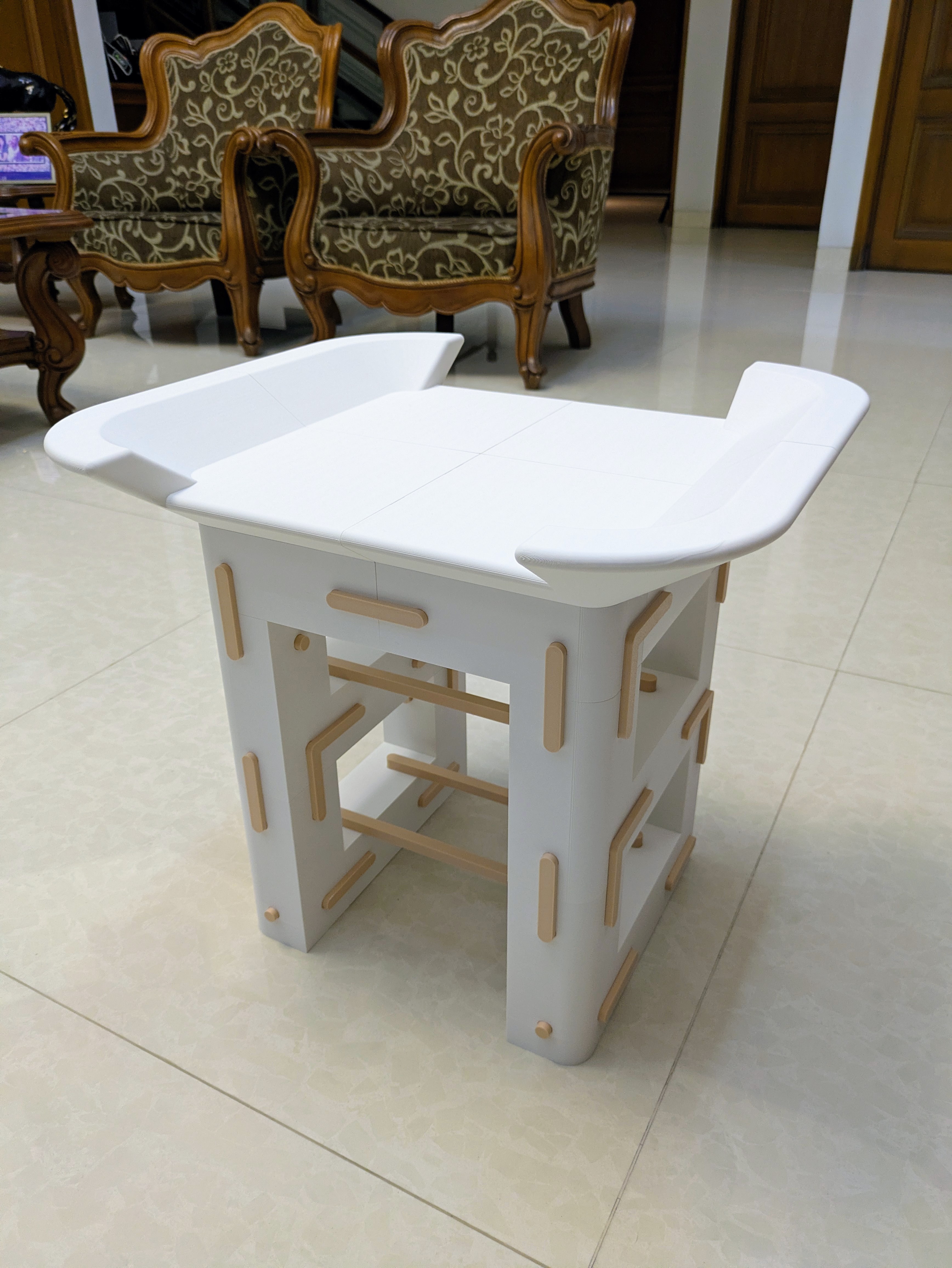
A fully 3D-printed chair that makes its method of assembly visible. Modular components and exposed connectors reveal the structural logic of the object while demonstrating how large furniture pieces can be fabricated using consumer-grade FDM printers.
Details
Fabrication: Consumer-grade desktop FDM 3D printing
Construction: Modular components with visible connectors
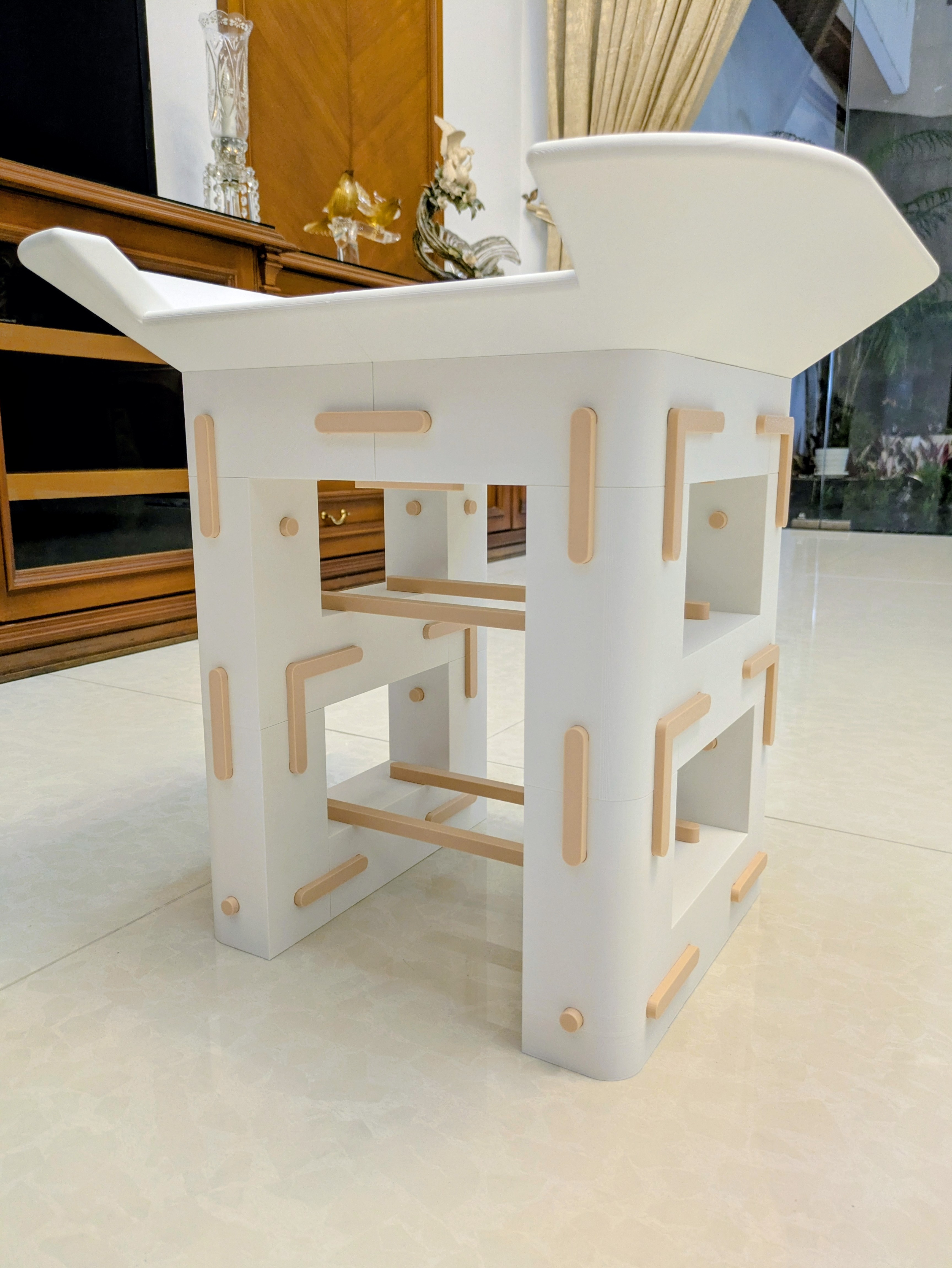
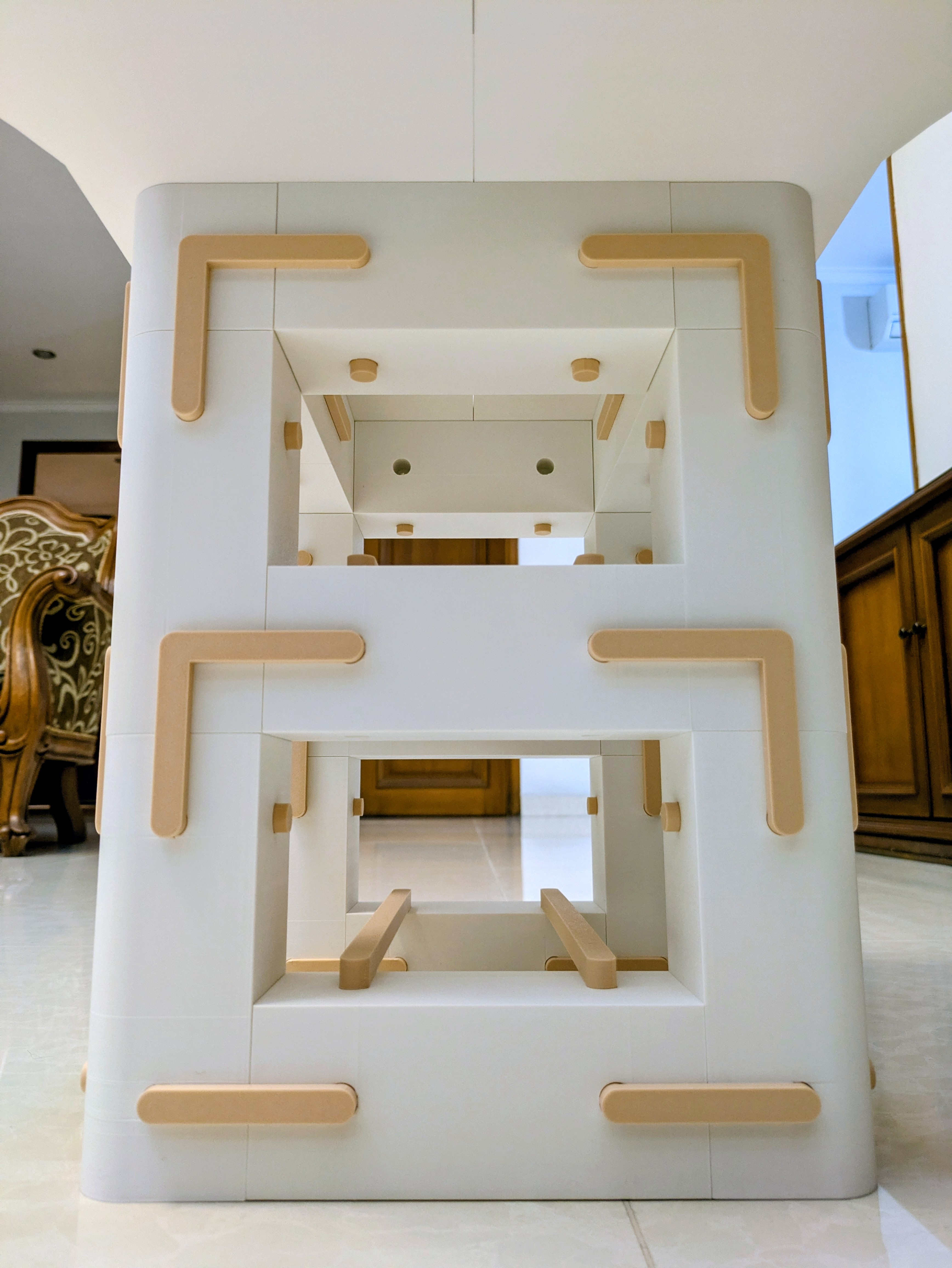
This project explores construction as a visible part of the design. Rather than hiding joints and fasteners, the chair highlights them as part of its visual language. Contrasting connectors mark where components meet, making the construction of the chair clearly legible.
The chair is composed of multiple interlocking elements that form a rigid frame. Hidden connectors join the primary blocks to create the structural core of the chair, while visible connectors act as external reinforcement that remains intentionally exposed.
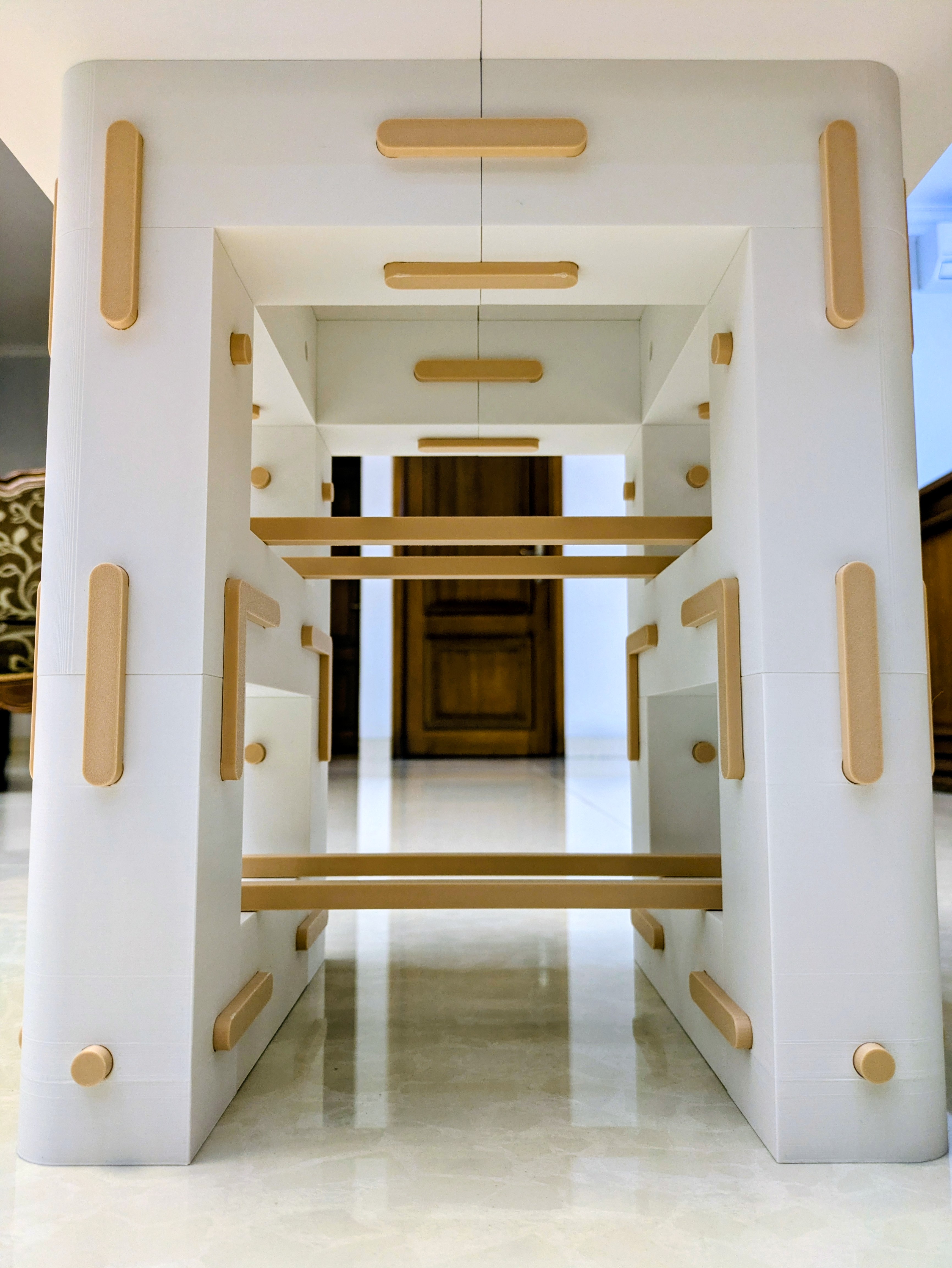
Internal cross members support the seat and strengthen the base, while large cutouts reduce visual mass and reveal the layered structure inside the chair. These openings expose the relationship between the outer shell and the supporting framework. Viewing the chair through its center reveals the alignment and depth of the internal structure. This perspective emphasizes the layered construction and highlights how the internal framework works together with the outer surfaces.
The seat introduces a softer form that contrasts with the structural base. Its recessed surface and flared edges define the stting area while visually lightening the upper portion of the chair.
All components are 3D printed in PLA using consumer-grade FDM printers. Since typical desktop machines have limited build volumes, the chair is divided into smaller printable parts that are later assembled into a larger structure. Rather than concealing this constraint, the design embraces it, turning the visible connectors and modular construction into defining characteristics of the final form.
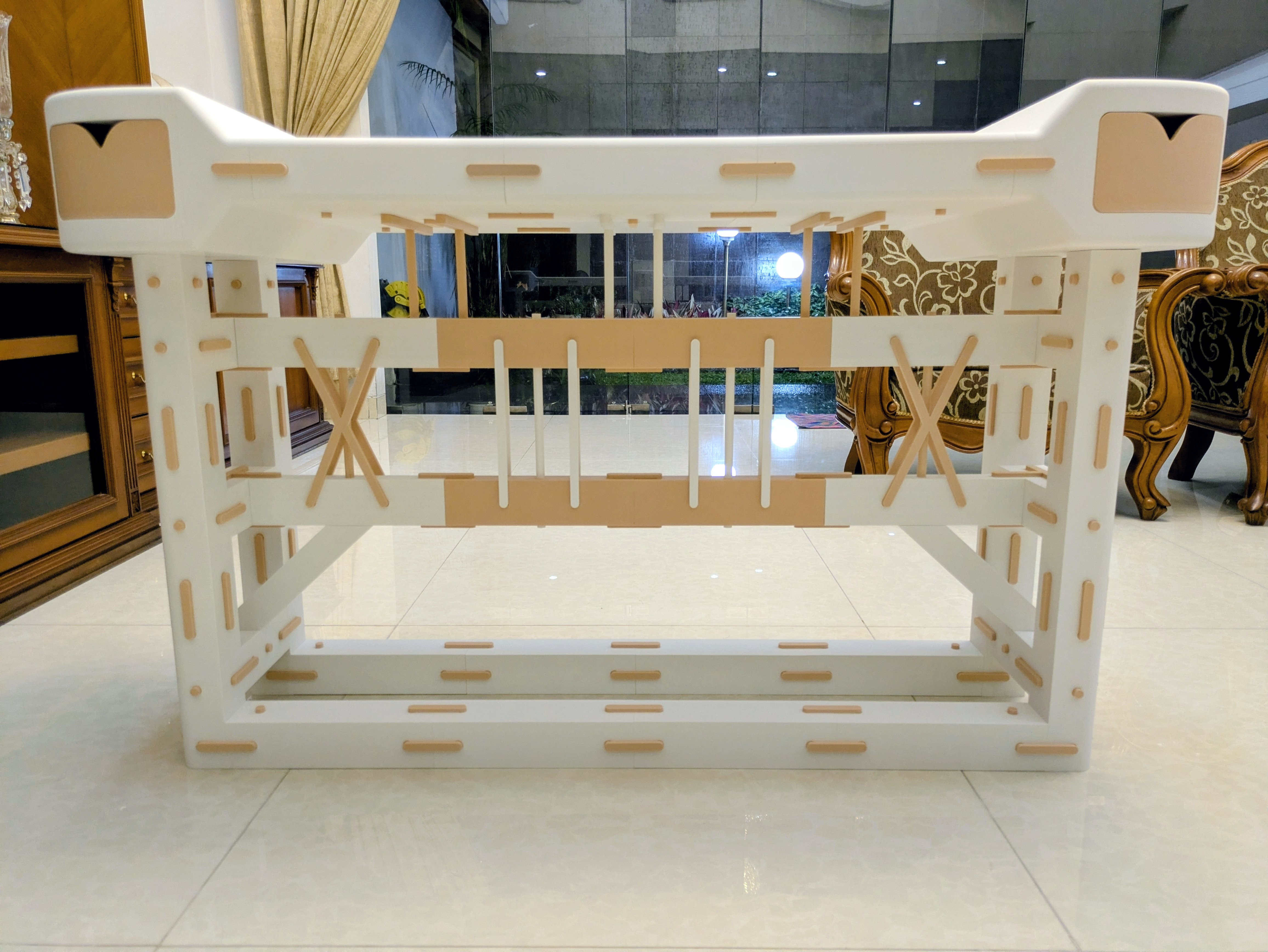
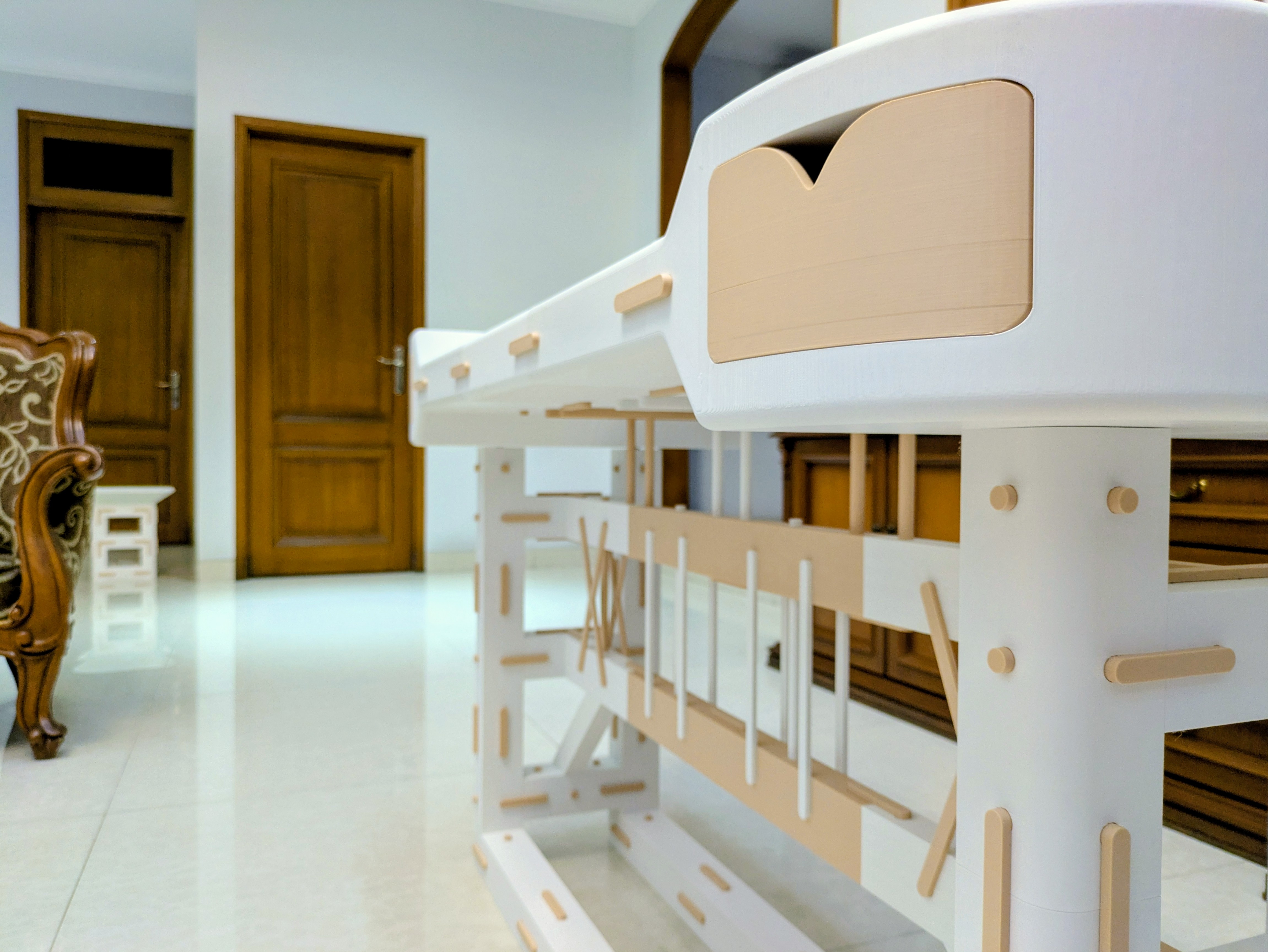
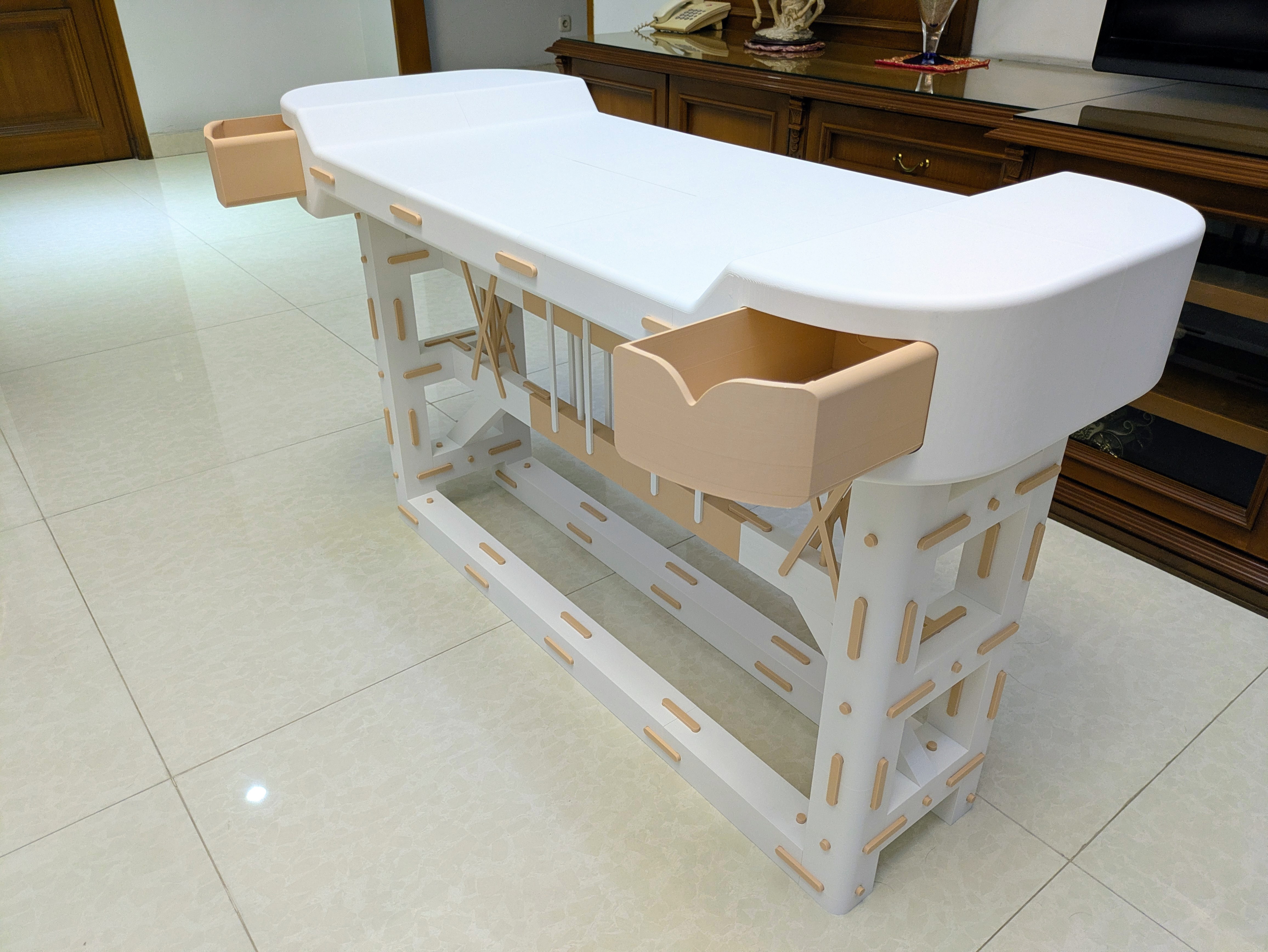
Discrete Assembly No.2: a modular table exploring span, structure, and integrated function
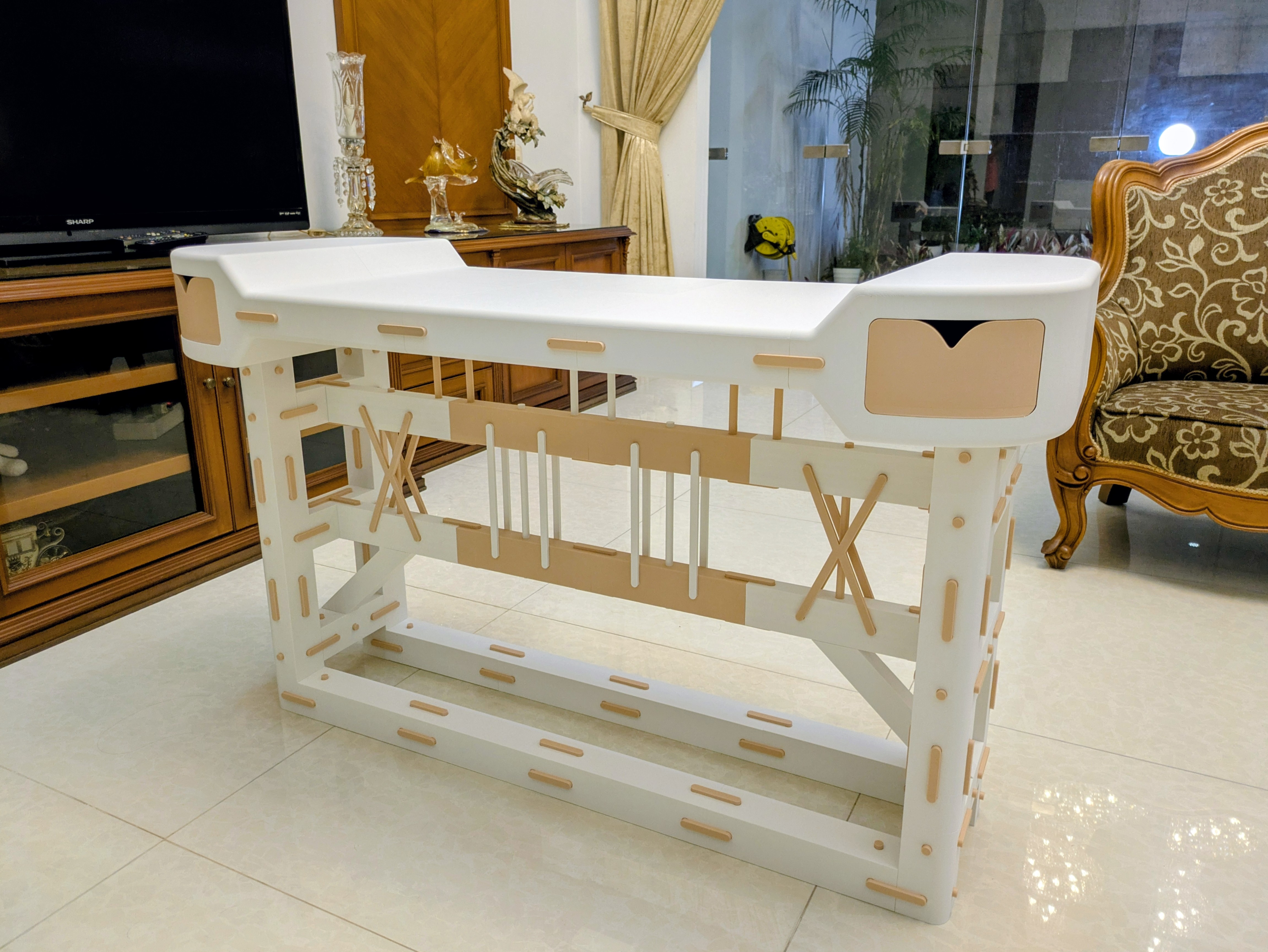
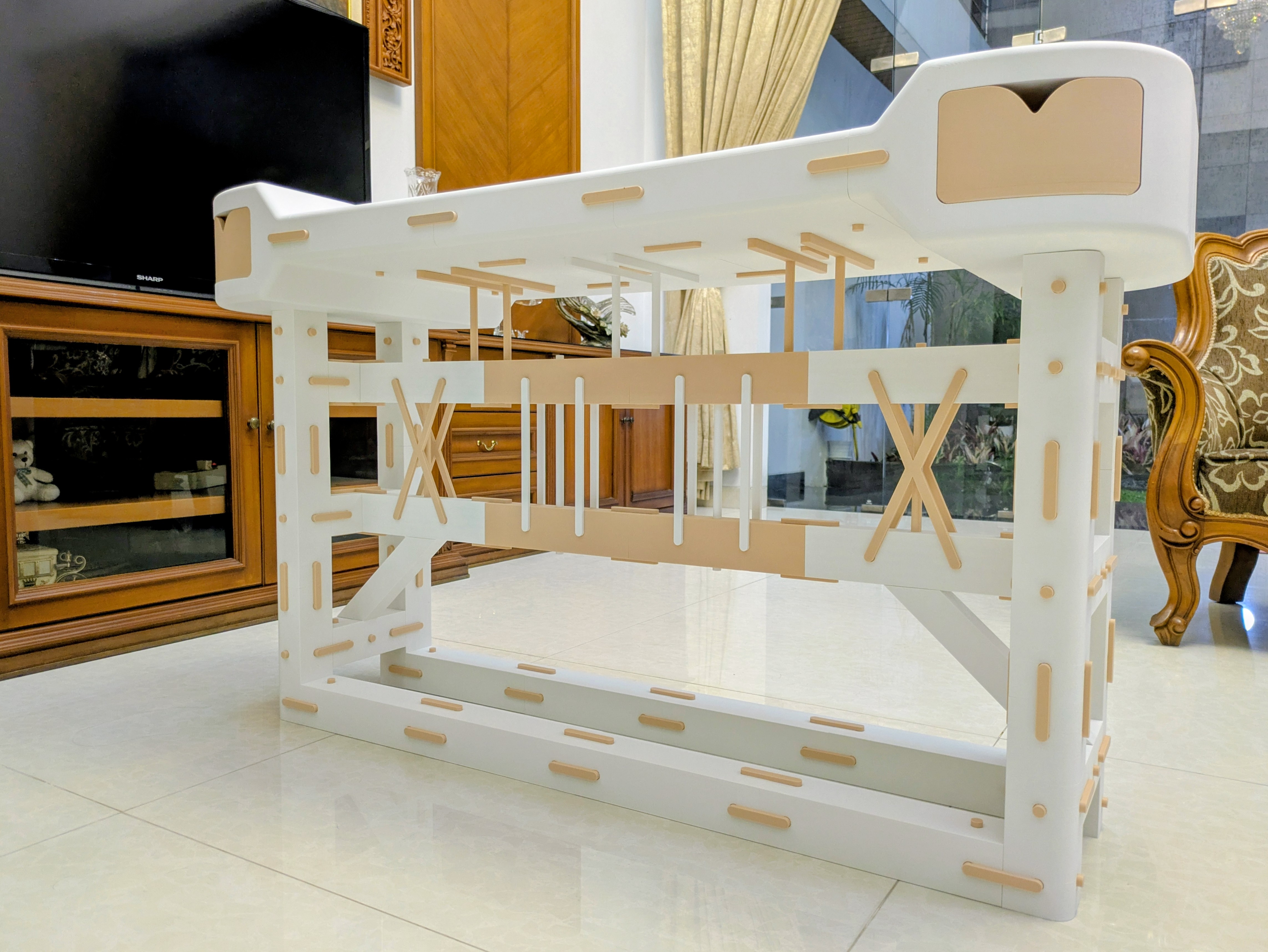
A fully 3D-printed table that extends the Discrete Assembly system into a larger horizontal span. The design applies the same modular logic and visible connectors to a different structural condition, demonstrating how the system adapts to longer distances and integrated functionality using consumer-grade FDM printers.
Details
Fabrication: Consumer-grade desktop FDM 3D printing
Construction: Modular components with visible connectors
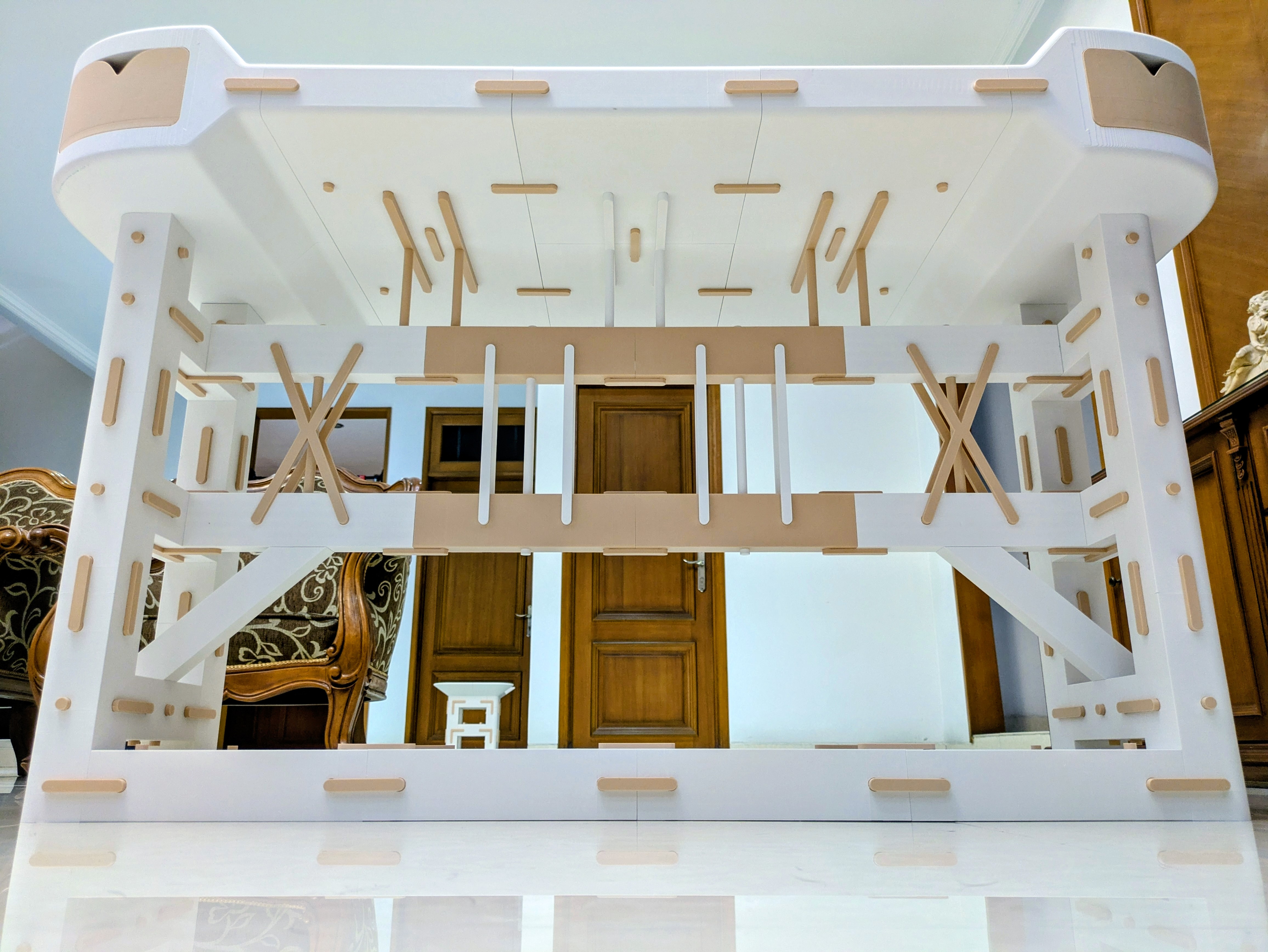
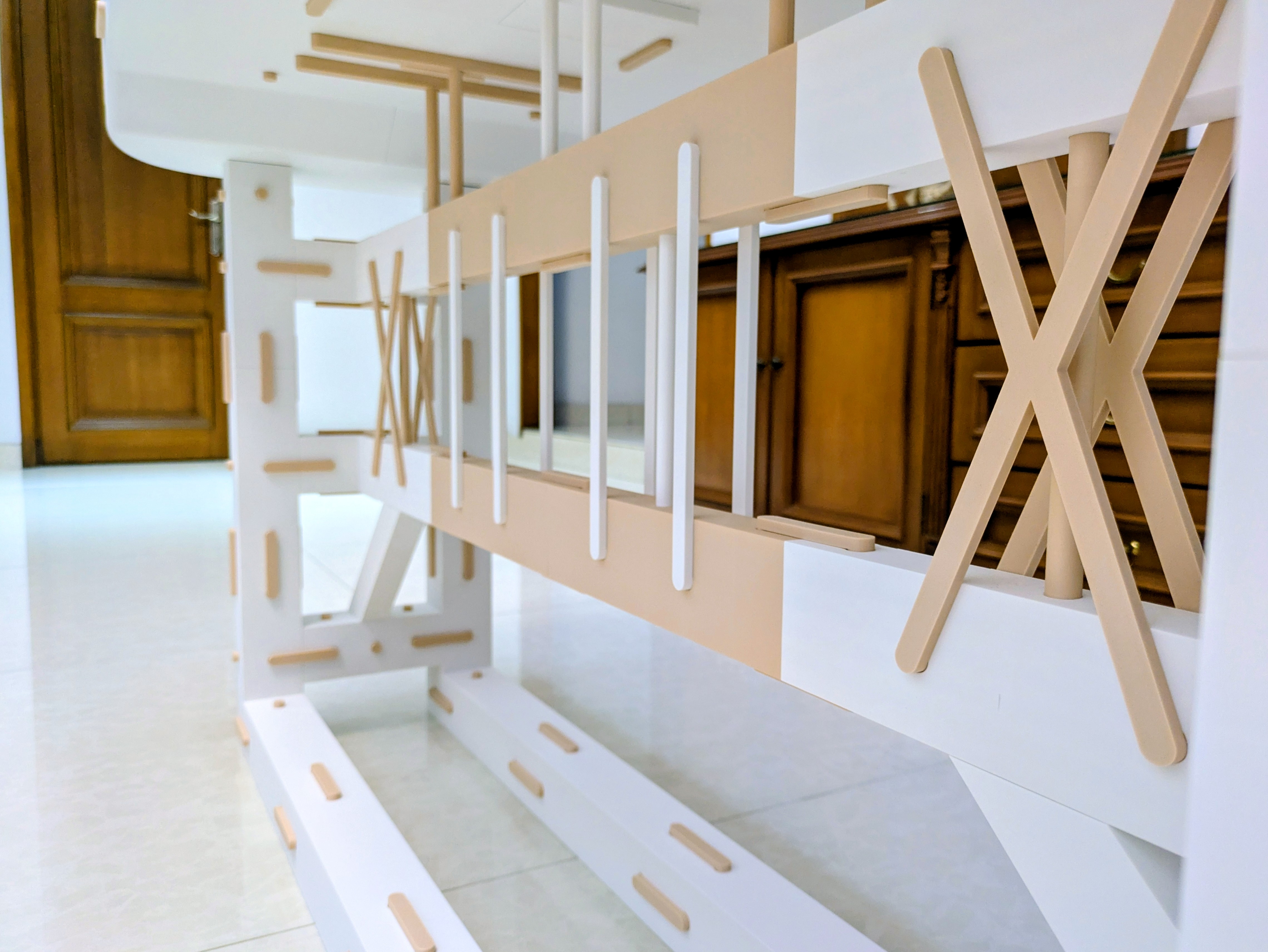
This project extends the Discrete Assembly system into a table, shifting from a compact object to a structure defined by span. The same modular components and exposed connectors concepts are retained, but reorganized to manage lateral stability over a longer distance.
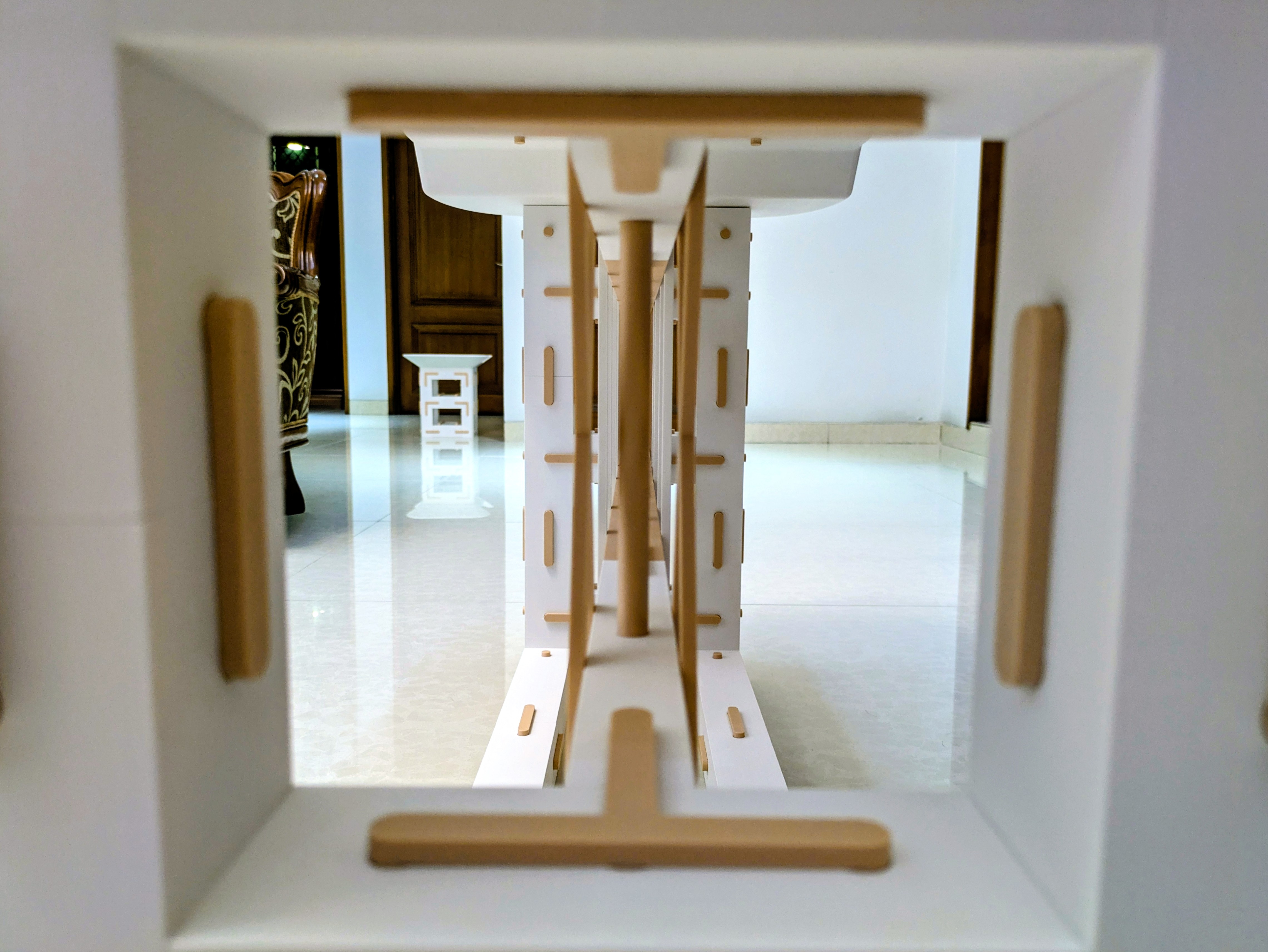
A continuous band beneath the tabletop concentrates the primary structure, while vertical members transfer load between the surface and the base. Diagonal supports and X-bracing are introduced at the outer bays to resist lateral movement, stabilizing the frame without enclosing it.
The tabletop contrasts the open frame with a more resolved surface. A thickened perimeter integrates drawers, while the recessed center reduces visual mass. Cutout openings eliminate additional hardware and maintain consistency with the assembly language.
All components are 3D printed in PLA using consumer-grade FDM printers. The table is divided into smaller printable parts and assembled into a larger structure, extending the same modular approach to a more demanding scale. This shifts the focus from object to structure, where connections, spacing, and internal members become the primary drivers of the design.